
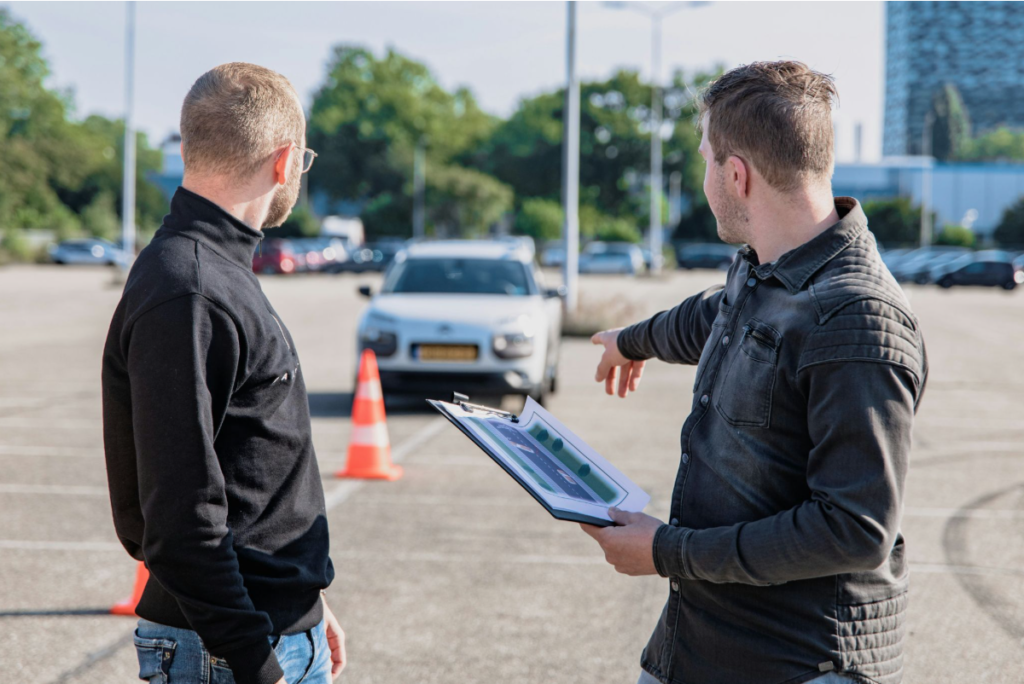
Taking your driving test can feel overwhelming, especially when you’re not sure what to expect. The truth is, most common driving test mistakes follow predictable patterns that catch new drivers off guard during their examination.
After decades of preparing students for their driving tests, certain errors appear repeatedly across testing centers. These mistakes aren’t random – they stem from specific gaps in preparation and practice that can be addressed with the right approach.
Understanding what goes wrong during driving tests helps you prepare more effectively. Most failures happen because students haven’t practiced enough in real-world conditions or haven’t received proper guidance on the specific skills that examiners evaluate most closely.
The good news is that these common mistakes on a driving test situations are entirely preventable. When you know what to watch for and practice the right techniques, your chances of passing increase dramatically. Let’s examine the seven most frequent errors that cause test failures and learn how to avoid them completely.
Rolling Through Stop Signs
One of the most common reasons students fail their driving test is improper stop-sign procedures. Many new drivers think they’re stopping completely, but they’re actually performing what’s called a “rolling stop” or “California stop.”
A complete stop means your vehicle comes to a full halt with zero forward movement. Your speedometer should read zero, and you should feel the car settle slightly as it comes to a complete stop. This pause should last at least two to three seconds before you proceed.
The problem occurs because students practice incomplete stops during their preparation. They slow down significantly but never actually stop moving. During the test, this immediately signals to the examiner that the student hasn’t mastered basic traffic rules.
To avoid this mistake, practice coming to complete stops at every stop sign during your preparation period. Count “one-Mississippi, two-Mississippi” after stopping to ensure you’re holding the position long enough. Make this behavior automatic so you don’t have to think about it during your test.
Inadequate Mirror and Blind Spot Checks
Failing to check mirrors and blind spots properly ranks among the most common driving test mistakes that lead to immediate failures. Examiners watch carefully to see if students perform these safety checks at appropriate times.
You should check your rearview mirror every five to eight seconds during normal driving. Side mirrors must be checked before any lane change, turn, or merging situation. These checks should be obvious head movements that the examiner can clearly observe.
Blind spot checks are equally important but often forgotten. Before changing lanes or merging, you must turn your head to look over your shoulder in the direction you plan to move. A quick glance isn’t enough – make it a deliberate, visible head turn.
Many students fail because they only check mirrors occasionally or forget to perform blind-spot checks entirely. Practice making these observations part of your regular driving routine. The key is making these checks obvious and consistent throughout your entire test.
Improper Parallel Parking Techniques
Setting Up Your Vehicle Position
Parallel parking failures happen more often than any other single maneuver during driving tests. The mistake usually begins with improper initial positioning before you even start backing up.
Position your vehicle alongside the front car, with your mirrors aligned and about 2 feet of space between the vehicles. Your car should be completely parallel to the curb at this starting position. Many students park too far away or at an angle, making the rest of the maneuver impossible.
Signal your intention to park and check all mirrors and blind spots before beginning. The examiner wants to see that you’re aware of traffic around you, not just focused on the parking space itself.
Executing the Backing Maneuver
Start backing slowly while turning your steering wheel fully toward the curb. Watch your passenger side mirror until you see the rear car’s headlight appear, then straighten your wheel and continue backing straight.
When your vehicle reaches a 45-degree angle to the curb, turn your steering wheel fully away from the curb. Continue backing until your car is parallel to the curb with even spacing front and rear.
The most common error during this phase is moving too quickly or making steering adjustments too late. Practice this maneuver repeatedly until you can perform it smoothly without multiple corrections.
Poor Speed Management
Driving too slowly causes just as many test failures as driving too fast. Many nervous students think driving well below the speed limit demonstrates caution, but it actually shows poor traffic awareness and can create dangerous situations.
Maintain speeds that match traffic flow and road conditions. On residential streets, this usually means driving at or near the posted speed limit unless conditions require slower speeds. Highway driving requires matching the pace of surrounding traffic.
Speed management also includes appropriate acceleration and deceleration. Gradual speed changes feel smoother and demonstrate better vehicle control than abrupt changes. Your passengers shouldn’t feel jerked around by sudden speed adjustments.
Practice maintaining consistent speeds without constantly checking your speedometer. Develop a feel for different speeds so you can focus on the road while maintaining an appropriate pace. This skill comes from experience and practice in various driving conditions.
Intersection Navigation Errors
Right Turn Mistakes
Right turns seem simple, but contain multiple opportunities for error during driving tests. The most common mistake is turning too wide, which can put you in the wrong lane or create safety hazards.
Stay in the rightmost lane throughout your turn and end up in the rightmost lane of the street you’re entering. Your turning radius should be tight enough to avoid swinging into other lanes during the maneuver.
Signal well before reaching the intersection and check mirrors and blind spots before turning. Come to a complete stop if there’s a stop sign or red light, even when turning right.
Many students also fail to yield properly to pedestrians in crosswalks. Always scan for pedestrians before completing your turn, and wait if anyone is crossing in your path.
Left Turn Challenges
Left turns present more complex challenges because you must yield to oncoming traffic and coordinate multiple safety checks. Position your vehicle in the proper turning lane well before reaching the intersection.
Enter the intersection when the light turns green, but wait in the middle of the intersection for a safe gap in oncoming traffic. Don’t block the intersection if traffic prevents you from completing your turn.
Judge gaps in traffic carefully – you need enough time to complete your turn without forcing oncoming vehicles to slow down. When in doubt, wait for a larger gap rather than rushing through a marginal opening.
Signal throughout the entire process and check for pedestrians in the crosswalk before completing your turn. The Beal Driving Academy instructors emphasize that patience during left turns demonstrates mature judgment that examiners value highly.
Improper Lane Changes and Merging
Lane changes and merging maneuvers reveal whether students can safely interact with other traffic. These skills require timing, judgment, and proper execution of procedures that many new drivers haven’t mastered.
The process starts with checking your mirrors and signaling your intention early. Signal at least 100 feet before making your lane change, or about three seconds of driving time at normal speeds.
Check your blind spot by turning your head to look over your shoulder in the direction you plan to move. This check must be obvious to the examiner – a quick eye movement isn’t sufficient.
Move smoothly into the new lane without cutting off other drivers or forcing them to adjust their speed. If there isn’t enough space, wait for a better opportunity rather than forcing your way into traffic.
Vehicle Control and Handling Issues
Basic vehicle control problems often stem from nervousness or insufficient practice time. These issues include steering problems, rough braking, and poor acceleration control, which make your driving feel unstable.
Smooth steering means making gradual adjustments rather than jerky movements. Keep both hands on the wheel at the 9 and 3 o’clock positions for maximum control. Avoid oversteering, as it can cause the vehicle to weave slightly.
Braking should be progressive – apply pressure gradually rather than jamming on the brakes. This technique stops the vehicle smoothly without throwing passengers forward. Practice finding the right pressure for different stopping situations.
Acceleration control involves pressing the gas pedal steadily rather than in bursts. Smooth acceleration helps maintain proper following distances and demonstrates good vehicle control to the examiner.
These fundamental skills improve with practice in various conditions. Spend time focusing specifically on smooth inputs to all vehicle controls until proper technique becomes automatic.
Test Day Preparation Strategies
Understanding common mistakes in driving test situations helps you prepare more effectively, but proper preparation involves more than just knowing what to avoid. Your preparation strategy should address both skills and mental readiness.
Practice all maneuvers in conditions similar to those on your test route, if possible. Many testing centers use the same general areas, so familiarity with local traffic patterns and road conditions provides an advantage.
Get adequate sleep the night before your test and arrive early to reduce stress. Bring all required documents and ensure your test vehicle meets all safety requirements, including working lights, signals, and mirrors.
The following preparation checklist helps ensure you’re ready for test day:
- Practice parallel parking until you can complete it consistently
- Master completes stops at all stop signs and red lights
- Practice smooth acceleration, braking, and steering inputs
- Perfect your mirror-checking routine and blind spot procedures
- Review proper intersection approach and turning techniques
- Ensure you can maintain appropriate speeds in various conditions
- Practice merging and lane changes with proper signaling
| Common Mistake | Preparation Focus | Practice Location |
| Rolling stops | Complete halt technique | Stop signs in quiet areas |
| Poor mirror checks | Visible head movements | All driving situations |
| Parking errors | Setup and execution | Empty parking lots |
| Speed issues | Traffic flow matching | Various speed limit areas |
| Skill Category | Time Investment | Success Indicator |
| Basic vehicle control | 3-4 hours | Smooth, confident operation |
| Parking maneuvers | 2-3 hours | Consistent successful completion |
| Traffic integration | 4-5 hours | Natural flow with other vehicles |
| Rule compliance | Ongoing | Automatic correct responses |
Start Your Path to Driving Success
Avoiding these seven common driving test mistakes requires proper instruction, adequate practice time, and professional feedback on your developing skills. Many students attempt to prepare on their own but miss the subtle techniques that make the difference between passing and failing.
Since 1973, Beal Driving Academy has helped thousands of Maine students identify and correct these exact problems before their test day. Our 10-hour one-on-one behind-the-wheel instruction program specifically targets the areas where most failures occur, giving you the confidence and skills needed to pass your test.
Don’t let preventable mistakes keep you from getting your license. Our experienced instructors know exactly what examiners look for and can help you master every aspect of safe driving. Register today and take the first step toward driving independence with proper preparation and professional guidance.